FAQ
All articles
Pacifier
What is the Dental-Step?
Sucking is an innate, natural reflex that gives your child a safe and calming feeling. Pacifiers are often used in stressful situations, as a sleep aid or to relieve the pain of teething. However, pacifiers often lead to misaligned teeth. We have therefore developed the orthodontic dentistar pacifier in close cooperation with dentists according to the latest scientific findings.
Compared to conventional pacifiers, the dentistar pacifier with its unique Dental-Step reduces the risk of misaligned teeth.
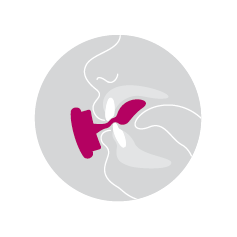
INTEGRATED DENTAL STEP & AN EXTRA FLAT BAGLET
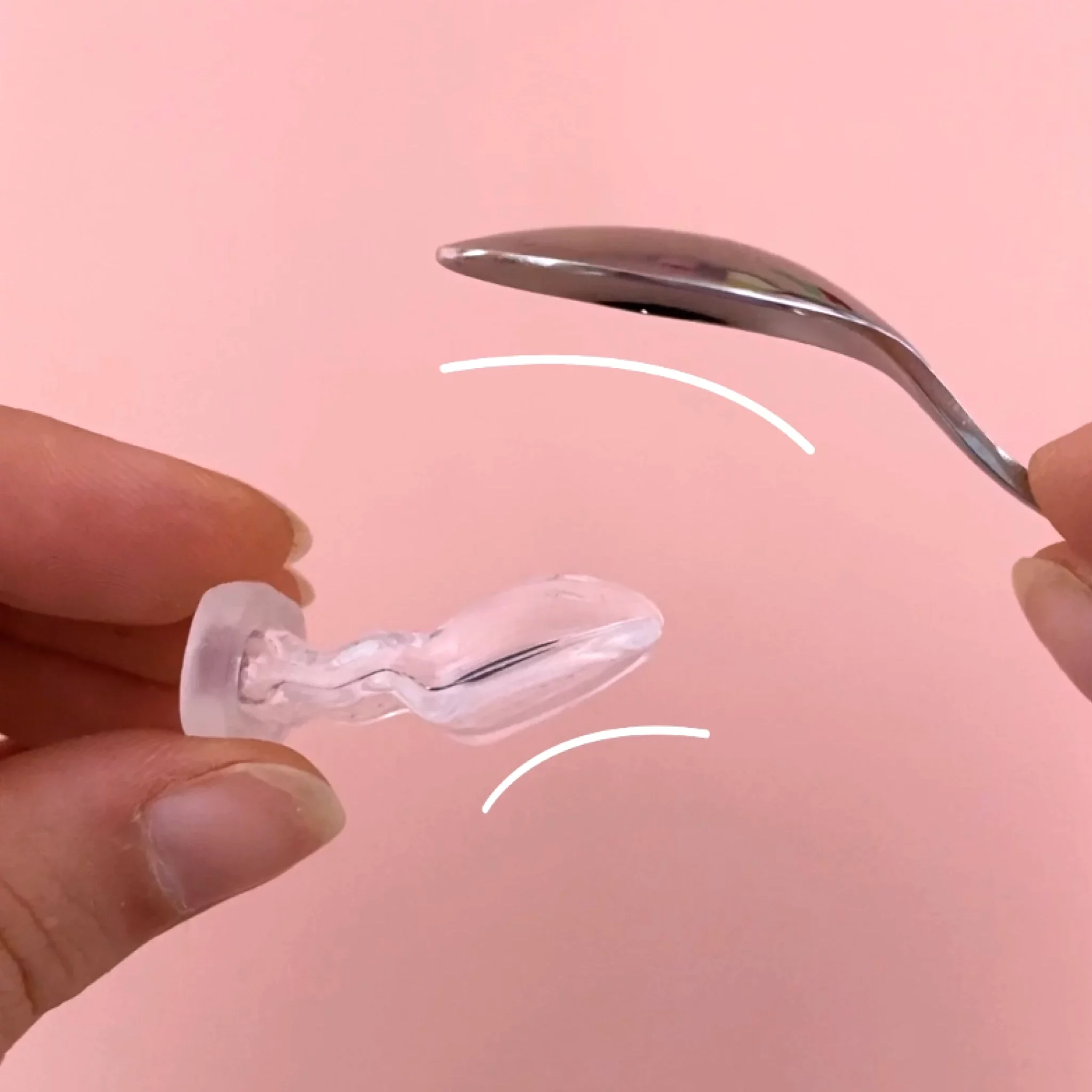
The Dental-Step traces the gums and teeth so that the teeth can remain in their optimal and straight position. The extra flat shaft minimizes the distance between the upper and lower incisors, which prevents an open bite.
LESS PRESSURE ON THE JAW
Sucking on a conventional pacifier creates a lot of pressure that is transferred to the jaw and teeth. This often results in misaligned teeth. The flat shaft of our dentistar soother reduces the pressure on the jaw and teeth by up to 90 %. This can reduce jaw deformities.
MORE SPACE FOR THE TONGUE
As the dentistar pacifier is adapted to the shape of the palate and is slightly angled upwards, the tongue retains its natural free space forwards and tongue malfunctions (e.g. lisping) can be avoided.
You are currently viewing a placeholder content from YouTube. To access the actual content, click the button below. Please note that doing so will share data with third-party providers.
More Information
WHICH PACIFIER SIZE IS THE RIGHT ONE?
The dentistar soother is available in three different sizes. As the teat with the Dental-Step is designed to fit your baby’s palate and teeth perfectly, the shape changes with the three sizes to provide ideal support for jaw and tooth development. In contrast to conventional soothers, the dentistar soother takes the normal position of the teeth into account.
Size 1 – I don’t have any teeth yet
The Dental-Step is only slightly defined in size 1. The small teat leaves enough room for the tongue.
Suitable from birth until the first tooth breaks through.
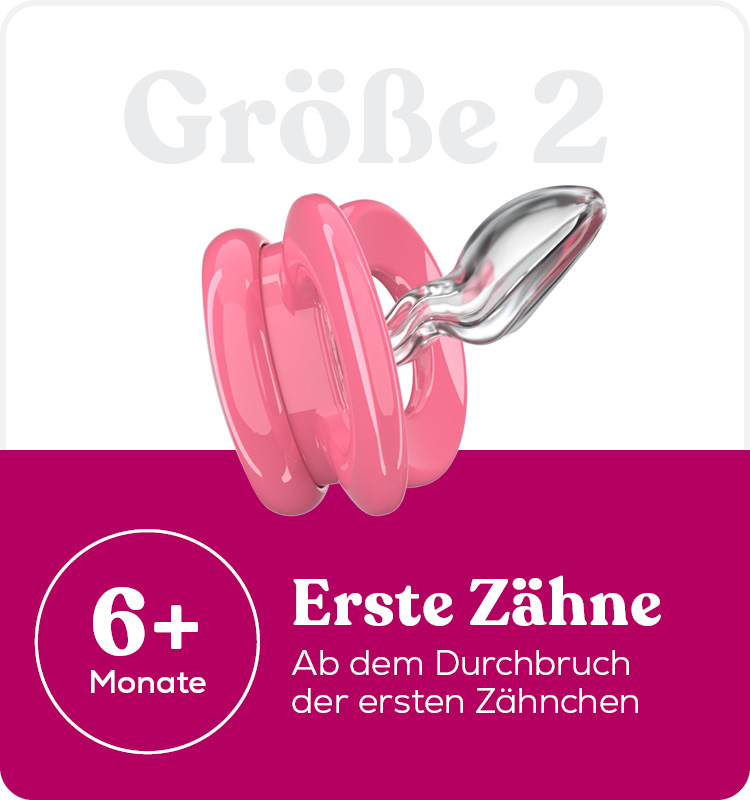
Size 2 – My first tooth has arrived
The Dental-Step is clearly visible. This significantly reduces the pressure on the jaw and teeth.
Perfectly sized for baby’s first teeth.
Size 3 – My first molar has arrived
Size 3 has the most pronounced Dental-Step. Pressure on the jaw and teeth is reduced and the natural development of the milk teeth is optimally supported.
Suitable from the first molar.
Tip:
Tooth growth in babies is very individual. When choosing the right size, take your baby’s dental development into account. As soon as the first teeth appear, you should choose size 2, even if your baby is still under 6 months old.



DOES MY CHILD NEED A PACIFIER?
Sucking is an innate, natural reflex that gives your child a safe and calming feeling. Soothers are often used in stressful situations, as a sleep aid or to relieve the pain of teething. When sucking, it is important that the soother is used in a targeted manner. However, we advise against using the soother for continuous sucking, as this increases the risk of malocclusion later on. The rule here is: as much as necessary, but as little as possible!
A soother can relieve breastfeeding mothers, especially with babies who have a high need to suckle, as it is always available as an everyday helper and can also be given by other people.
OUR MISSION
Soothers yes, but as tooth-friendly and orthodontic as possible! As a soother is a foreign object in the baby’s mouth, it is particularly important to us at dentistar to keep the impact on the jaw, teeth and tongue as low as possible. Large, round soothers in particular usually fill the space in the mouth almost completely so that the tongue has hardly any room and is pressed downwards. This can promote speech defects and mouth breathing.
An angled, flat teat, on the other hand, gives the tongue more room to move and is not pressed downwards. It is guided upwards in the back of the mouth, which reduces the risk of speech defects such as lisping.
PACIFIER VS. THUMBS
If your child has a high need to suck, a pacifier is more suitable than the thumb: the pacifier can be used in a targeted manner, exerts less pressure on the jaw and teeth and is also easier to wean off.
Are pacifiers bad for teeth?
Misaligned teeth and jaws usually develop within the first 18 months. They are favored by too large teats and too long sucking times. Large teats push the tongue out of its natural position and can restrict its function. They also push the teeth out of their natural position. This often results in misaligned teeth such as an open bite.
When breastfeeding, breastfeeding, eating or chewing, the jaw and teeth are usually only stressed for a short time, which is why this does not change the position of the teeth. With pacifiers or thumb sucking, however, the period of use is usually significantly longer.
PREVENT MISALIGNED TEETH
The most important factors in preventing misaligned teeth are therefore the shape of the teat and the amount of time the baby sucks on the soother.
The teat should be as small and flat as possible and angled upwards. The Dental-Step also supports the natural tooth position and natural jaw development.
REDUCE THE SUCKING TIME
If possible, the soother should be used as often as necessary but as little as possible. This means that your baby uses the soother to calm down and fall asleep, but not when playing or sleeping.
In addition, the pacifier should be discontinued from the age of 2 at the latest in order to avoid permanent misaligned teeth.
PACIFIER VS. THUMBS
As babies usually have a high need to suck, soothers and thumb sucking can help them to calm down and self-regulate. Nevertheless, the soother should be preferred to thumb sucking. The thumb is larger and harder than a soother, which can lead to misaligned teeth and jaw deformities. The thumb is also much more difficult to wean off, as it is always available.
CAN PACIFIERS PREVENT SUDDEN INFANT DEATH SYNDROME (SIDS)?
International studies show that the risk of Sudden Infant Death Syndrome (SIDS) can be significantly reduced by using a pacifier. The reasons for this have not yet been conclusively researched. According to a recent study, oxygen saturation increases with the use of a soother, which could be one reason for the reduced risk. It is therefore recommended to give the pacifier at bedtime (including during the day) until the 1st birthday. The risk of SIDS is highest up to the 1st birthday.
Some aspects have also proven to be effective against SIDS: Ensure the correct sleeping position and environment – place your baby in a supine position to sleep, place your baby in a suitable sleeping bag, do not cover your baby with a comforter, make sure the room temperature is correct and do not dress your baby too warmly. Your baby should grow up in a smoke-free environment before and after birth. If possible, your baby should be fully breastfed for 6 months.
You can find more information here: https://safetosleep.nichd.nih.gov/reduce-risk/reduce
HOW DO I CLEAN THE PACIFIER PROPERLY?
In the first few months of life (up to the end of the 3rd month), your child’s immune system is not yet fully developed and therefore particular attention must be paid to hygiene. As soon as the soother has been dropped on the floor or otherwise got dirty, it must be boiled before being used again. For babies older than three months, it is sufficient to clean the soother with hot water and mild detergent and boil it once a day.
You are currently viewing a placeholder content from YouTube. To access the actual content, click the button below. Please note that doing so will share data with third-party providers.
More Information
How to get water out of the teat after cleaning?
Some water may collect in theteat during boiling. This is not harmful to health, but should be removed before use. Squeeze the teat with clean fingers and gently squeeze the water out of the teat. Shaking gently can also help to remove the water. Repeat this a few times. Leave the soother to dry in a hygienic place.
WHEN SHOULD I REPLACE THE PACIFIER?
As a general rule, a soother should be replaced every one to two months – even if it appears to be in perfect condition. If cracks or other damage appear earlier, it must be replaced immediately.
BYE-BYE PACIFIER - WHEN TO WEAN OFF?
From the age of two, we recommend gradually weaning your child off the soother. This allows the jaw and teeth to continue to develop healthily. Here too, every child is completely individual. Some find it easy to part with their faithful companion, others are very attached to it. If your child doesn’t want to give up the soother so easily, a little support and patience will help.
dentistar STOPPi®
The dentistar STOPPi® is a practical helper for the transition to the soother-free period.
Teething
WHEN DO BABIES' MILK TEETH APPEAR?
The first tooth usually appears from the 6th month, sometimes earlier or later. The following eruption times are guidelines. However, they may vary from baby to baby.
- 6-8 months: lower incisors
- 8-10 months: upper incisors
- 10-14 months: lateral incisors
- 14-18 months: 1st molar
- 18-24 months: canines
- 24-30 months: 2nd molar
Around the age of 3, your baby usually has all its milk teeth.
You are currently viewing a placeholder content from YouTube. To access the actual content, click the button below. Please note that doing so will share data with third-party providers.
More Information
HOW CAN I TELL IF MY BABY IS TEETHING?
Signs may include restlessness, increased drooling, irritating behavior, chewing on objects, swollen gums and sleep disturbances. Some babies may also have a fever or a reduced appetite.
Common symptoms are:
- Increased need to chew: Your baby puts more fingers or objects in their mouth to chew on them.
- Reddened/swollen gums: The gums are red and your baby’s cheeks are warm or hot.
- Increased salivation: The increased drooling can cause a rash/teething rash around the mouth or on the neck. Therefore, keep the mouth and neck dry with a clean cloth.
- Whining: Your baby whines more than usual, is restless and sleeps less well. It now also has an increased need for affection and cuddles.
- Less appetite: Your baby has less appetite than usual due to teething pain. Therefore, offer your baby breastfeeding or drinking more often.
- Weakened immune system: Your baby may be sick more often and have diarrhea or a fever, for example. This is not caused by teething itself, but by a weakened immune system and should be clarified by a doctor if in doubt.
What can I do to help my baby with teething?
Beißringe und Kühlbeißringe können helfen, das Zahnfleisch zu beruhigen. Sanfte Massagen des Zahnfleisches mit einem sauberen Finger können ebenfalls Erleichterung bringen. Du kannst deinem Baby auch gekühlte Nahrungsmittel zum Kauen oder einen Fruchtsauger mit gekühltem Obst oder Gemüse anbieten.
Is it normal for my baby to eat less during teething?
Yes, it is normal for babies to have a reduced appetite during teething. Pain and discomfort can cause them to refuse to eat. Therefore, offer your baby breastfeeding or water or small snacks more often.
Can teething cause fever?
A slight fever may occur, but is usually not higher than 100 °F. If the fever is higher or lasts longer, you should have it checked out by a doctor. The cause is not the teething itself, but often a weakened immune system.
I'm breastfeeding - what can I bear in mind with a teething baby?
Pay particular attention to latch correctly. If your baby bites, you should stop breastfeeding to protect the nipple. Remain calm but firm. You should clean the nipples regularly and thoroughly to prevent infections.
How can I care for my baby's mouth and teeth during teething?
As soon as the first teeth erupt or have erupted, you should start regular dental care at the latest. Use a soft children’s toothbrush or a silicone finger toothbrush. The finger toothbrush can be easier to use, especially at the beginning, and also massages the irritated gums when teething.
Food & drink
How do I clean the straw cup correctly?
The dentistar straw cup is very easy to clean and can even be completely washed in the dishwasher. To do this, unscrew the cup, remove the straw and place all the components in the dishwasher. You should also clean the straw with the cleaning brush provided. It is important to clean the straw regularly to prevent the build-up of bacteria.
You are currently viewing a placeholder content from YouTube. To access the actual content, click the button below. Please note that doing so will share data with third-party providers.
More Information
Which drinks can be filled into the straw cup?
You can fill the cup with a variety of drinks, including water, juices and milk. The cup is not suitable for hot drinks. With carbonated drinks, please note that the cup may no longer be leak-proof.
When should I start introducing complementary foods?
Most experts recommend starting complementary feeding between the 4th and 6th month, depending on your baby’s individual development.
How long can I keep baby food in the freezer compartment?
You can usually keep home-cooked baby food in the silicone freezer for up to 3 months in the freezer compartment, while breast milk can be frozen for up to 6 months if it is stored correctly.
Dental care
When should I start brushing my child's teeth?
DENTAL CARE RIGHT FROM THE START
For many children, the toothbrush is initially a foreign object that they do not want in their mouth. It therefore makes sense to prepare the child before the toothbrush is used. The best way to do this is by carefully massaging the still toothless jaw – e.g. with an Oral Cleaning Finger. This way, your child can slowly get used to it.
FROM THE FIRST TOOTH
From the first milk tooth, dental care should be carried out once a day. There are special, very soft baby toothbrushes for this. You should also use children’s toothpaste.
LEARNING TO BRUSH TEETH
At around 2 years of age, most motor skills are well enough developed for your child to be introduced to independent tooth brushing.
BRUSH THE TEETH INDEPENDENTLY
You should brush your child’s teeth until they are around 6-7 years old. This is the age when children are able to brush their own teeth thoroughly.
Tip: Children imitate their parents – even when brushing their teeth. That’s why you should make daily dental care after meals a shared ritual.
How do I brush my baby's teeth properly?
The COI method is recommended to ensure that your child’s teeth are always brushed properly.
C: The first step is to clean the chewing surfaces. Short back and forth movements ensure that the chewing surfaces are nice and clean.
O: Then come the outer surfaces. The teeth lie on top of each other. Brush the front of the teeth with gentle, circular movements.
I: Last up are the inner surfaces. Brush from red to white, i.e. from the gums to the teeth.
With these three steps, you can ensure that you always brush your child’s teeth thoroughly. If your child is already brushing their own teeth, you should brush them according to this system at least until they reach school age.
You are currently viewing a placeholder content from YouTube. To access the actual content, click the button below. Please note that doing so will share data with third-party providers.
More Information
When should I take my child to the dentist for the first time?
Take your child to the dentist as early and regularly as possible – usually in the first year of life. A good time is, for example, when the first tooth appears. This not only ensures that your child gets used to it quickly, but also that any misaligned teeth or increased risk of tooth decay can be detected early on. Daily dental and oral care will ensure that your child’s visit to the dentist is anxiety-free.
How can I encourage my child to brush their teeth?
Motivating children to brush their teeth is a major challenge for many parents. It works best when it’s fun and not forced. For example, listen to a funny toothbrushing song while brushing teeth, try rhymes or small games. Let your child have a choice of location and environment. If your child wants to brush their own teeth from an early age, you can try brushing each other’s teeth or taking turns.
We know that brushing teeth can be a big struggle – don’t lose heart if it doesn’t work and try out different variations with your child.
Should I use toothpaste with or without fluoride?
Fluoride strengthens tooth enamel and makes teeth more resistant to tooth decay. Babies should therefore be given fluoride in combination with vitamin D, e.g. as a pill, from birth. As young children are not yet able to spit out toothpaste properly, it is advisable to use a fluoride-free toothpaste and give them vitamin D and fluoride as usual. This ensures that the toothpaste does not add too much fluoride. Talk to your pediatrician for the best fluoride supply.
Are special dental care products necessary for babies?
Yes, there are special dental care products for babies, including soft toothbrushes and fluoride-free toothpaste. These are tailored to the needs of babies.
How can I prevent tooth decay in my child?
Decay in milk teeth already has an impact on the health of permanent teeth. Therefore, make sure to avoid tooth decay or detect it early and have it treated by a dentist.
If possible, clean your baby’s teeth twice a day or after sugary meals.
Try to avoid sugary and acidic foods and offer your child plenty of water to rinse out any leftover food.
Also make sure you get enough fluoride. Fluoride strengthens tooth enamel and helps prevent tooth decay. Talk to your pediatrician for the best fluoride supply.
Pregnancy
Why is dental care so important during pregnancy?
The risk of tooth decay is increased during pregnancy. The pH value of your saliva shifts towards the acidic range during pregnancy, which is exacerbated by increased stomach acid due to vomiting. Caries bacteria also produce acids that your saliva can no longer neutralize itself. Good dental care is therefore particularly important.
Also make sure you eat a healthy and balanced diet and avoid consuming too much sugar, as this promotes the development of tooth decay. For cravings, find a sugar-free snack that you like and always have with you.
What should I bear in mind when caring for my teeth during pregnancy?
- Brush your teeth at least twice a day.
- Use a toothbrush with particularly soft bristles to protect your gums.
- Use fluoride toothpaste or additional fluoride gel. This protects your teeth from tooth decay. Discuss the best dosage with your dentist.
- Use dental floss. The areas between the teeth are particularly popular with bacteria and should be cleaned thoroughly.
- After vomiting, make sure you rinse your mouth well and wait a little before brushing your teeth to protect your gums.
- If you have problems with nausea when brushing your teeth, switch to a smaller or children’s toothbrush. If you are still unable to brush your teeth, use a mild mouthwash. However, this should not replace proper dental care in the long term, but can be helpful for a short period of time.
- Avoid sugar and make sure you eat a healthy diet. This is also important for dental health during pregnancy.
- Chew gum. Chewing gum stimulates your saliva flow, which helps to neutralize an elevated pH value in the mouth. This prevents the development of tooth decay.
What do I do if the toothbrush makes me sick?
Wenn eine Zahnbürste einen Brechreiz auslöst, versuche es mit einer kleineren oder einer Kinderzahnbürste. If this is not possible, use a mild mouthwash. However, this should not replace proper dental care in the long term, but can be helpful for a short time.
How do I clean my teeth after vomiting?
To protect your tooth enamel, you should not brush your teeth immediately afterwards. Rinse your mouth with water or a mild mouthwash and brush your teeth thoroughly later.
Use alcohol-free, mild mouthwashes If you cannot tolerate the taste of your rinse or toothpaste at the moment, switch to menthol-free or unflavored products.
Can I go to the dentist during my pregnancy?
Many dental treatments and professional teeth cleaning are possible during pregnancy. Due to the increased risk of tooth decay and gingivitis, you should have dental problems checked by a doctor as soon as possible, as they can have an impact on your baby’s development. Ask your doctor for advice on what is possible.
Toys
How can the Soother Keeper help with soother weaning?
The Soother Keeper is a loyal companion for your baby – it always keeps the pacifier within reach and offers a sense of security But what if you want to gradually wean your baby off the pacifier? If your baby incorporates the pacifier into their daily sleep and soothing routine, you can try removing the pacifier from the Soother Keeper over time and continue the routine with the Soother Keeper without the pacifier. The familiar routine will make it easier for your baby to manage without a pacifier, as the Soother Keeper will continue to provide comfort and closeness.
Other
I am a midwife and am interested in working with you. Who should I contact?
Thank you for your interest in dentistar. Please send us an e-mail to: social@novatex.de
Pacifier
Pacifier
What is the Dental-Step?
Sucking is an innate, natural reflex that gives your child a safe and calming feeling. Pacifiers are often used in stressful situations, as a sleep aid or to relieve the pain of teething. However, pacifiers often lead to misaligned teeth. We have therefore developed the orthodontic dentistar pacifier in close cooperation with dentists according to the latest scientific findings.
Compared to conventional pacifiers, the dentistar pacifier with its unique Dental-Step reduces the risk of misaligned teeth.
INTEGRATED DENTAL STEP & AN EXTRA FLAT BAGLET
The Dental-Step traces the gums and teeth so that the teeth can remain in their optimal and straight position. The extra flat shaft minimizes the distance between the upper and lower incisors, which prevents an open bite.
LESS PRESSURE ON THE JAW
Sucking on a conventional pacifier creates a lot of pressure that is transferred to the jaw and teeth. This often results in misaligned teeth. The flat shaft of our dentistar pacifier reduces the pressure on the jaw and teeth by up to 90 %. This has been proven to prevent misaligned teeth.
MORE SPACE FOR THE TONGUE
As the dentistar pacifier is adapted to the shape of the palate and is slightly angled upwards, the tongue retains its natural free space forwards and tongue malfunctions (e.g. lisping) can be avoided.
You are currently viewing a placeholder content from YouTube. To access the actual content, click the button below. Please note that doing so will share data with third-party providers.
More Information
WHICH PACIFIER SIZE IS THE RIGHT ONE?
The dentistar soother is available in three different sizes. As the teat with the Dental-Step is designed to fit your baby’s palate and teeth perfectly, the shape changes with the three sizes to provide ideal support for jaw and tooth development. In contrast to conventional soothers, the dentistar soother takes the normal position of the teeth into account.
Size 1 – I don’t have any teeth yet
The Dental-Step is only slightly defined in size 1. The small teat leaves enough room for the tongue.
Suitable from birth until the first tooth breaks through.
Size 2 – My first tooth has arrived
The Dental-Step is clearly visible. This significantly reduces the pressure on the jaw and teeth.
Perfectly sized for baby’s first teeth.
Size 3 – My first molar has arrived
Size 3 has the most pronounced Dental-Step. Pressure on the jaw and teeth is reduced and the natural development of the milk teeth is optimally supported.
Suitable from the first molar.
Tip:
Tooth growth in babies is very individual. When choosing the right size, take your baby’s dental development into account. As soon as the first teeth appear, you should choose size 2, even if your baby is still under 6 months old.
DOES MY CHILD NEED A PACIFIER?
Sucking is an innate, natural reflex that gives your child a safe and calming feeling. Soothers are often used in stressful situations, as a sleep aid or to relieve the pain of teething. When sucking, it is important that the soother is used in a targeted manner. However, we advise against using the soother for continuous sucking, as this increases the risk of malocclusion later on. The rule here is: as much as necessary, but as little as possible!
A soother can relieve breastfeeding mothers, especially with babies who have a high need to suckle, as it is always available as an everyday helper and can also be given by other people.
OUR MISSION
Soothers yes, but as tooth-friendly and orthodontic as possible! As a soother is a foreign object in the baby’s mouth, it is particularly important to us at dentistar to keep the impact on the jaw, teeth and tongue as low as possible. Large, round soothers in particular usually fill the space in the mouth almost completely so that the tongue has hardly any room and is pressed downwards. This can promote speech defects and mouth breathing.
An angled, flat teat, on the other hand, gives the tongue more room to move and is not pressed downwards. It is guided upwards in the back of the mouth, which reduces the risk of speech defects such as lisping.
PACIFIER VS. THUMBS
If your child has a high need to suck, a pacifier is more suitable than the thumb: the pacifier can be used in a targeted manner, exerts less pressure on the jaw and teeth and is also easier to wean off.
Are pacifiers bad for teeth?
Misaligned teeth and jaws usually develop within the first 18 months. They are favored by too large teats and too long sucking times. Large teats push the tongue out of its natural position and can restrict its function. They also push the teeth out of their natural position. This often results in misaligned teeth such as an open bite.
When breastfeeding, breastfeeding, eating or chewing, the jaw and teeth are usually only stressed for a short time, which is why this does not change the position of the teeth. With pacifiers or thumb sucking, however, the period of use is usually significantly longer.
PREVENT MISALIGNED TEETH
The most important factors in preventing misaligned teeth are therefore the shape of the teat and the amount of time the baby sucks on the soother.
The teat should be as small and flat as possible and angled upwards. The Dental-Step also supports the natural tooth position and natural jaw development.
REDUCE THE SUCKING TIME
If possible, the soother should be used as often as necessary but as little as possible. This means that your baby uses the soother to calm down and fall asleep, but not when playing or sleeping.
In addition, the pacifier should be discontinued from the age of 2 at the latest in order to avoid permanent misaligned teeth.
PACIFIER VS. THUMBS
As babies usually have a high need to suck, soothers and thumb sucking can help them to calm down and self-regulate. Nevertheless, the soother should be preferred to thumb sucking. The thumb is larger and harder than a soother, which can lead to misaligned teeth and jaw deformities. The thumb is also much more difficult to wean off, as it is always available.
CAN PACIFIERS PREVENT SUDDEN INFANT DEATH SYNDROME (SIDS)?
International studies show that the risk of Sudden Infant Death Syndrome (SIDS) can be significantly reduced by using a pacifier. The reasons for this have not yet been conclusively researched. According to a recent study, oxygen saturation increases with the use of a soother, which could be one reason for the reduced risk. It is therefore recommended to give the pacifier at bedtime (including during the day) until the 1st birthday. The risk of SIDS is highest up to the 1st birthday.
Some aspects have also proven to be effective against SIDS: Ensure the correct sleeping position and environment – place your baby in a supine position to sleep, place your baby in a suitable sleeping bag, do not cover your baby with a comforter, make sure the room temperature is correct and do not dress your baby too warmly. Your baby should grow up in a smoke-free environment before and after birth. If possible, your baby should be fully breastfed for 6 months.
You can find more information here: https://safetosleep.nichd.nih.gov/reduce-risk/reduce
HOW DO I CLEAN THE PACIFIER PROPERLY?
In the first few months of life (up to the end of the 3rd month), your child’s immune system is not yet fully developed and therefore particular attention must be paid to hygiene. As soon as the soother has been dropped on the floor or otherwise got dirty, it must be boiled before being used again. For babies older than three months, it is sufficient to clean the soother with hot water and mild detergent and boil it once a day.
You are currently viewing a placeholder content from YouTube. To access the actual content, click the button below. Please note that doing so will share data with third-party providers.
More Information
How to get water out of the teat after cleaning?
Some water may collect in theteat during boiling. This is not harmful to health, but should be removed before use. Squeeze the teat with clean fingers and gently squeeze the water out of the teat. Shaking gently can also help to remove the water. Repeat this a few times. Leave the soother to dry in a hygienic place.
WHEN SHOULD I REPLACE THE PACIFIER?
As a general rule, a soother should be replaced every one to two months – even if it appears to be in perfect condition. If cracks or other damage appear earlier, it must be replaced immediately.
BYE-BYE PACIFIER - WHEN TO WEAN OFF?
From the age of two, we recommend gradually weaning your child off the soother. This allows the jaw and teeth to continue to develop healthily. Here too, every child is completely individual. Some find it easy to part with their faithful companion, others are very attached to it. If your child doesn’t want to give up the soother so easily, a little support and patience will help.
dentistar STOPPi®
The dentistar STOPPi® is a practical helper for the transition to the soother-free period.
Teething
Teething
WHEN DO BABIES' MILK TEETH APPEAR?
The first tooth usually appears from the 6th month, sometimes earlier or later. The following eruption times are guidelines. However, they may vary from baby to baby.
- 6-8 months: lower incisors
- 8-10 months: upper incisors
- 10-14 months: lateral incisors
- 14-18 months: 1st molar
- 18-24 months: canines
- 24-30 months: 2nd molar
Around the age of 3, your baby usually has all its milk teeth.
You are currently viewing a placeholder content from YouTube. To access the actual content, click the button below. Please note that doing so will share data with third-party providers.
More Information
HOW CAN I TELL IF MY BABY IS TEETHING?
Signs may include restlessness, increased drooling, irritating behavior, chewing on objects, swollen gums and sleep disturbances. Some babies may also have a fever or a reduced appetite.
Common symptoms are:
- Increased need to chew: Your baby puts more fingers or objects in their mouth to chew on them.
- Reddened/swollen gums: The gums are red and your baby’s cheeks are warm or hot.
- Increased salivation: The increased drooling can cause a rash/teething rash around the mouth or on the neck. Therefore, keep the mouth and neck dry with a clean cloth.
- Whining: Your baby whines more than usual, is restless and sleeps less well. It now also has an increased need for affection and cuddles.
- Less appetite: Your baby has less appetite than usual due to teething pain. Therefore, offer your baby breastfeeding or drinking more often.
- Weakened immune system: Your baby may be sick more often and have diarrhea or a fever, for example. This is not caused by teething itself, but by a weakened immune system and should be clarified by a doctor if in doubt.
What can I do to help my baby with teething?
Beißringe und Kühlbeißringe können helfen, das Zahnfleisch zu beruhigen. Sanfte Massagen des Zahnfleisches mit einem sauberen Finger können ebenfalls Erleichterung bringen. Du kannst deinem Baby auch gekühlte Nahrungsmittel zum Kauen oder einen Fruchtsauger mit gekühltem Obst oder Gemüse anbieten.
Is it normal for my baby to eat less during teething?
Yes, it is normal for babies to have a reduced appetite during teething. Pain and discomfort can cause them to refuse to eat. Therefore, offer your baby breastfeeding or water or small snacks more often.
Can teething cause fever?
A slight fever may occur, but is usually not higher than 100 °F. If the fever is higher or lasts longer, you should have it checked out by a doctor. The cause is not the teething itself, but often a weakened immune system.
I'm breastfeeding - what can I bear in mind with a teething baby?
Pay particular attention to latch correctly. If your baby bites, you should stop breastfeeding to protect the nipple. Remain calm but firm. You should clean the nipples regularly and thoroughly to prevent infections.
How can I care for my baby's mouth and teeth during teething?
As soon as the first teeth erupt or have erupted, you should start regular dental care at the latest. Use a soft children’s toothbrush or a silicone finger toothbrush. The finger toothbrush can be easier to use, especially at the beginning, and also massages the irritated gums when teething.
Dental care
Dental care
When should I start brushing my child's teeth?
DENTAL CARE RIGHT FROM THE START
For many children, the toothbrush is initially a foreign object that they do not want in their mouth. It therefore makes sense to prepare the child before the toothbrush is used. The best way to do this is by carefully massaging the still toothless jaw – e.g. with an Oral Cleaning Finger. This way, your child can slowly get used to it.
FROM THE FIRST TOOTH
From the first milk tooth, dental care should be carried out once a day. There are special, very soft baby toothbrushes for this. You should also use children’s toothpaste.
LEARNING TO BRUSH TEETH
At around 2 years of age, most motor skills are well enough developed for your child to be introduced to independent tooth brushing.
BRUSH THE TEETH INDEPENDENTLY
You should brush your child’s teeth until they are around 6-7 years old. This is the age when children are able to brush their own teeth thoroughly.
Tip: Children imitate their parents – even when brushing their teeth. That’s why you should make daily dental care after meals a shared ritual.
How do I brush my baby's teeth properly?
The COI method is recommended to ensure that your child’s teeth are always brushed properly.
C: The first step is to clean the chewing surfaces. Short back and forth movements ensure that the chewing surfaces are nice and clean.
O: Then come the outer surfaces. The teeth lie on top of each other. Brush the front of the teeth with gentle, circular movements.
I: Last up are the inner surfaces. Brush from red to white, i.e. from the gums to the teeth.
With these three steps, you can ensure that you always brush your child’s teeth thoroughly. If your child is already brushing their own teeth, you should brush them according to this system at least until they reach school age.
You are currently viewing a placeholder content from YouTube. To access the actual content, click the button below. Please note that doing so will share data with third-party providers.
More Information
When should I take my child to the dentist for the first time?
Take your child to the dentist as early and regularly as possible – usually in the first year of life. A good time is, for example, when the first tooth appears. This not only ensures that your child gets used to it quickly, but also that any misaligned teeth or increased risk of tooth decay can be detected early on. Daily dental and oral care will ensure that your child’s visit to the dentist is anxiety-free.
How can I encourage my child to brush their teeth?
Motivating children to brush their teeth is a major challenge for many parents. It works best when it’s fun and not forced. For example, listen to a funny toothbrushing song while brushing teeth, try rhymes or small games. Let your child have a choice of location and environment. If your child wants to brush their own teeth from an early age, you can try brushing each other’s teeth or taking turns.
We know that brushing teeth can be a big struggle – don’t lose heart if it doesn’t work and try out different variations with your child.
Should I use toothpaste with or without fluoride?
Fluoride strengthens tooth enamel and makes teeth more resistant to tooth decay. Babies should therefore be given fluoride in combination with vitamin D, e.g. as a pill, from birth. As young children are not yet able to spit out toothpaste properly, it is advisable to use a fluoride-free toothpaste and give them vitamin D and fluoride as usual. This ensures that the toothpaste does not add too much fluoride. Talk to your pediatrician for the best fluoride supply.
Are special dental care products necessary for babies?
Yes, there are special dental care products for babies, including soft toothbrushes and fluoride-free toothpaste. These are tailored to the needs of babies.
How can I prevent tooth decay in my child?
Decay in milk teeth already has an impact on the health of permanent teeth. Therefore, make sure to avoid tooth decay or detect it early and have it treated by a dentist.
If possible, clean your baby’s teeth twice a day or after sugary meals.
Try to avoid sugary and acidic foods and offer your child plenty of water to rinse out any leftover food.
Also make sure you get enough fluoride. Fluoride strengthens tooth enamel and helps prevent tooth decay. Talk to your pediatrician for the best fluoride supply.
Food & drink
Food & drink
How do I clean the straw cup correctly?
The dentistar straw cup is very easy to clean and can even be completely washed in the dishwasher. To do this, unscrew the cup, remove the straw and place all the components in the dishwasher. You should also clean the straw with the cleaning brush provided. It is important to clean the straw regularly to prevent the build-up of bacteria.
You are currently viewing a placeholder content from YouTube. To access the actual content, click the button below. Please note that doing so will share data with third-party providers.
More Information
Which drinks can be filled into the straw cup?
You can fill the cup with a variety of drinks, including water, juices and milk. The cup is not suitable for hot drinks. With carbonated drinks, please note that the cup may no longer be leak-proof.
When should I start introducing complementary foods?
Most experts recommend starting complementary feeding between the 4th and 6th month, depending on your baby’s individual development.
How long can I keep baby food in the freezer compartment?
You can usually keep home-cooked baby food in the silicone freezer for up to 3 months in the freezer compartment, while breast milk can be frozen for up to 6 months if it is stored correctly.
Pregnancy
Pregnancy
Why is dental care so important during pregnancy?
The risk of tooth decay is increased during pregnancy. The pH value of your saliva shifts towards the acidic range during pregnancy, which is exacerbated by increased stomach acid due to vomiting. Caries bacteria also produce acids that your saliva can no longer neutralize itself. Good dental care is therefore particularly important.
Also make sure you eat a healthy and balanced diet and avoid consuming too much sugar, as this promotes the development of tooth decay. For cravings, find a sugar-free snack that you like and always have with you.
What should I bear in mind when caring for my teeth during pregnancy?
- Brush your teeth at least twice a day.
- Use a toothbrush with particularly soft bristles to protect your gums.
- Use fluoride toothpaste or additional fluoride gel. This protects your teeth from tooth decay. Discuss the best dosage with your dentist.
- Use dental floss. The areas between the teeth are particularly popular with bacteria and should be cleaned thoroughly.
- After vomiting, make sure you rinse your mouth well and wait a little before brushing your teeth to protect your gums.
- If you have problems with nausea when brushing your teeth, switch to a smaller or children’s toothbrush. If you are still unable to brush your teeth, use a mild mouthwash. However, this should not replace proper dental care in the long term, but can be helpful for a short period of time.
- Avoid sugar and make sure you eat a healthy diet. This is also important for dental health during pregnancy.
- Chew gum. Chewing gum stimulates your saliva flow, which helps to neutralize an elevated pH value in the mouth. This prevents the development of tooth decay.
What do I do if the toothbrush makes me sick?
Wenn eine Zahnbürste einen Brechreiz auslöst, versuche es mit einer kleineren oder einer Kinderzahnbürste. If this is not possible, use a mild mouthwash. However, this should not replace proper dental care in the long term, but can be helpful for a short time.
How do I clean my teeth after vomiting?
To protect your tooth enamel, you should not brush your teeth immediately afterwards. Rinse your mouth with water or a mild mouthwash and brush your teeth thoroughly later.
Use alcohol-free, mild mouthwashes If you cannot tolerate the taste of your rinse or toothpaste at the moment, switch to menthol-free or unflavored products.
Can I go to the dentist during my pregnancy?
Many dental treatments and professional teeth cleaning are possible during pregnancy. Due to the increased risk of tooth decay and gingivitis, you should have dental problems checked by a doctor as soon as possible, as they can have an impact on your baby’s development. Ask your doctor for advice on what is possible.
Toys
Toys
How can the Soother Keeper help with soother weaning?
The Soother Keeper is a loyal companion for your baby – it always keeps the pacifier within reach and offers a sense of security But what if you want to gradually wean your baby off the pacifier? If your baby incorporates the pacifier into their daily sleep and soothing routine, you can try removing the pacifier from the Soother Keeper over time and continue the routine with the Soother Keeper without the pacifier. The familiar routine will make it easier for your baby to manage without a pacifier, as the Soother Keeper will continue to provide comfort and closeness.
Other
Other
I am a midwife and am interested in working with you. Who should I contact?
Thank you for your interest in dentistar. Please send us an e-mail to: social@novatex.de